

Why Your 2026 Budget Should Include More Retreats, Not Fewer
Let's talk about the hidden cost of only planning one "big" offsite per year, instead of creating a "cadence" of offsites aligned with your Rhythm of Business.

If you’re a People Leader staring down the 2026 budgeting process with your third cup of coffee today, a fully packed calendar, and “circle back season” in full effect, I already know what’s happening in your world:
Your CFO is tightening the screws.
Your exec team is quietly worried about alignment.
And your employees…well, let’s just say burnout is trending harder than any TikTok.
It may be tempting to cut team retreats from your 2026 budget.
But…here’s the thing:
Cutting back on team retreats next year is a terrible idea.
Adding MORE retreats in 2026 can actually SAVE you money, net net.
When you consider actual business outcomes: retention, speed, quality of execution, reduced misalignment, and fewer expensive “strategic resets” halfway through the year, it pays to plan regular team retreats.
Don’t be “penny wise” and “pound foolish” as they say!
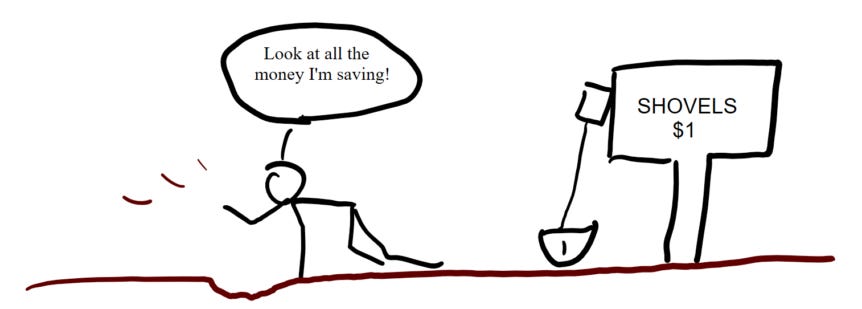
The Hidden Cost of “Just One Retreat Per Year”
A lot of leadership teams still assume they can get away with doing one big retreat in Q2/Q3 and calling it a day.
But if your workforce is remote or hybrid?
That’s like trying to play the entire NFL season after only one practice.
Misalignment builds quietly, then gets expensive.
A Harvard Business Review study found that poor alignment costs organizations an estimated 5–10% of annual revenue due to slow execution and duplicated work. (HBR, “The Costly Business of Silos”).
McKinsey found similar results: top-performing companies are 2x more likely to have regular, structured alignment rituals and strategy checkpoints. (McKinsey, 2023 Organizational Health Index).
Meanwhile, Gallup reported that 51% of employees are disengaged, and the biggest driver of disengagement is “lack of connection to the company mission and team.” (Gallup State of the Global Workplace, 2023).
You can drown in Slack channels and quarterly Zoom all-hands until your mic stops working…but none of that creates real alignment.
In short, one annual team retreat isn’t enough to glue together an entire year of remote or hybrid work.
The Surprising ROI of More In-Person Time
Let’s talk hard ROI, because your Finance team will ask.
1. Retention Savings: $20,000–$200,000 Per Employee
Forbes estimates the cost of turnover at 50% to 200% of an employee’s annual salary for experienced roles. (Forbes, “The True Cost of Employee Turnover”.)
If adding a mid-year alignment retreat keeps even one key engineer, PM, or sales leader from quitting?
You’ve probably already paid for the whole event.
And this isn’t hypothetical. According to McKinsey, employees who feel “deeply connected” to their team and purpose are 5x more likely to stay. (McKinsey, 2022).
Retreats create that stickiness in a way Zoom can’t.
2. Productivity & Speed: A 20–25% Lift
Bain & Company published a landmark study showing that teams with high trust and frequent in-person collaboration make decisions 2x faster with 20–25% higher productivity. (Bain 2020 Team Performance Study.)
More retreats = more trust
More trust = more speed
More speed = more revenue, fewer slowdowns
This is especially true for product teams, cross-functional project teams, and executives navigating new company stages.
3. Better Strategy Execution
HBR reports that 95% of employees don’t understand their company’s strategy or how their work connects to it. (HBR, “Employees Can’t Execute When They Don’t Know the Strategy”.)
Retreats fix this in about an hour.
When your whole leadership team is in a room together, cross-functional blockers disappear fast. You get to alignment that would normally take six weeks of async work.
Don’t take it from me…watch this vlog from the CEO of Stan, one of our repeat clients.
Why More Retreats Actually Reduce Meetings
This is the part CFOs love.
Counterintuitively, when companies do 2–4 retreats per year (or more, if you’re at a larger company), they often see:
Fewer standing meetings
Fewer “alignment check-ins”
Fewer last-minute fire drills
Fewer project restarts
Fewer miscommunications that balloon into conflicts
Why?
Because you fix the root causes in person.
You leave an offsite with a clarified roadmap, fewer misunderstandings, and more trust between teams.
And suddenly the weekly sync becomes 15 minutes instead of 60.
Or it gets canceled altogether.
The Companies We See Increasing Retreat Cadence
Across the 450+ retreats we’ve run, here’s a trend line that’s impossible to ignore:
The most successful remote/hybrid teams (especially those that are VC-funded, PE-backed, or otherwise high-growth companies) are ensuring that everyone at the company attends 2-4 offsites per year.
The most common patterns:
1. Quarterly executive and/or senior leadership team retreats
These are super high-level, because this is where multi-million dollar decisions are made. Can coincide with board meetings.
2. 1-2 department-level retreats per year
To re-align product, engineering, sales, CS, or cross-functional pods.
Depending on the team, the cadence will vary.
3. A full-company offsite or all-hands at least once, possibly twice annually
More celebratory, culture-building, and/or training-focused.
This isn’t fluff.
This is operational discipline for modern distributed teams.
Remote/hybrid/distributed work requires a new Operating System compared to pre-pandemic, mostly office-first companies.
“But Jared… Will My CFO Actually Buy This?”
Yes…
IF you speak their language and make the business case for more frequent, strategic, planned-well-in-advance offsites.
Show the cost of misalignment.
Explain the positive ROI of retreats.
Teach them about the investment you want to make in increased employee engagement, retention, and alignment.
Feel free to cite:
McKinsey: High-alignment companies achieve 2x revenue growth.
HBR: Misalignment costs 5–10% of annual revenue.
Gallup: Disengagement costs $8.8 trillion globally.
Forbes: Turnover costs 50–200% of salary per employee.
Then show how more, smaller, frequent retreats alongside larger department-level and All-Hands retreats cost less than:
Even one regretted attrition
One failed or mismanaged product launch
One quarter of slowed decision-making or execution
One strategic reset that rewrites half the product roadmap
The Bottom Line: More Retreats = More Alignment, More Retention, More Speed
Your 2026 retreat budget shouldn’t shrink.
It should become a strategic tool.
If you want to run a modern distributed company, you need:
Clarity
Trust
Shared purpose
High-bandwidth communication
Real connection
And a predictable cadence of in-person alignment
There is no cheaper or faster way to achieve that than adding more retreats to your 2026 plan.
Your people will thank you.
Your CEO will sing your praises.
And Finance will wonder why you didn’t do this sooner.

Planning Your 2026 Retreats? We Can Save You Money Immediately.
If you want a no-commitment, low-friction way to get started, our team can:
Identify cost-saving opportunities
Suggest ideal timing and cadence
Build early budgets
Compare destinations
Help you plan 2026 without risk
Book time with our team! It’s free, with no commitment and zero pressure.
We’ll help you map your entire 2026 retreat strategy whether you work with us or not.
Thanks for reading!
Jared
Founder/CEO of Offsite
PS - when you’re ready to plan your next offsite, search our curated marketplace with thousands of amazing offsite venues, up to 50% savings on room blocks, meeting space, and more.
Plus, we offer end-to-end offsite planning services if you want a “done for you” experience. See why companies like Remote, Buffer, Guild, Perplexity, 15Five, Metabase, and others trust Offsite for their team retreats.