

The Hidden Ways Your Venue Contract Can Wreck Your Budget (Even After You’ve “Negotiated” It)
Don't overspend on room blocks, meeting space, F&B, and more. Let Offsite save you time, money, and stress when planning team retreats globally. Start for free at offsite.com

You did everything right.
You got three venue proposals. You compared them side by side.
You pushed back on room rate. You got a discount. You signed the contract feeling pretty good about yourself.
And then the invoice came in $40,000 over budget.
This is not a rare story. We hear versions of it constantly from the people leaders, Chiefs of Staff, and EAs we work with at Offsite. Smart, organized operators who did their homework... and still got blindsided. Not because they were careless.
Because hotel contracts are specifically designed to be confusing, and the financial exposure is buried in the language most people skip.
The headline rate is just the beginning. What kills budgets is everything underneath it.
So let’s talk about that.

Why “Negotiated” Doesn’t Mean What You Think It Does
Here’s the thing about hotel contract negotiations: most people negotiate the wrong things.
They fight hard on room rate (where hotels have some flexibility) and completely ignore attrition clauses, F&B minimums, and AV fees (where hotels make most of their margin). It’s like negotiating the sticker price of a car and then not reading the financing terms.
The hotel knows this. Their salespeople are trained to make you feel like you won…because if you’re celebrating the room rate, you’re not asking hard questions about everything else.
I’m not saying this to make you feel bad. I’m saying it because once you know where the landmines are, you can actually protect your budget. And you can walk into the next negotiation knowing which numbers actually matter.
Here’s where it gets expensive.
The Attrition Clause: The Most Dangerous Paragraph in Your Contract
Attrition is the hotel’s protection against you booking a room block and then not filling it.
The way it typically works: you commit to a certain number of room nights. If your actual pickup falls below a certain percentage of that commitment (usually 80–90%), you owe the hotel the difference…at the contracted rate, sometimes minus a small tax offset.
Let’s make that concrete. Say you book a 50-room block for 3 nights. That’s 150 room nights at $250/night = $37,500 in committed room revenue. If your attrition threshold is 80% and your team only fills 100 rooms... you owe the hotel for 20 room nights you never used. That’s $5,000 out of nowhere.
Now multiply that across a larger event. Or a situation where half your team had last-minute travel disruptions. Or where you overestimated headcount during planning.
What to do about it:
Always negotiate the attrition threshold down. 80% is standard. Push for 70%, even 65% if you can.
Ask for a “slippage” clause that lets you reduce your block by 10–15% without penalty, up to 60 days before arrival.
Build in a realistic buffer when you set your room block size. Book for 85% of your confirmed attendees, not 100%.
Get the attrition calculation method spelled out explicitly in writing. Some hotels calculate on total room nights; others calculate per night. The difference matters.

F&B Minimums: The Line Item That Surprises Everyone
Food and beverage minimums are one of the most misunderstood parts of a hotel contract.
Here’s how they work: as part of the deal for getting meeting space (which is often offered at a discount or “complimentary”), the hotel requires you to spend a minimum dollar amount on food and beverage through their outlets. That might be $15,000. It might be $80,000. Depends on the property, the market, and the size of your group.
The tricky part is what counts toward that minimum and what doesn’t.
Service charges and taxes? Usually not counted toward the minimum. So if you think you’re hitting $50,000 in F&B spend, but $12,000 of that is service charges, you might be $12,000 short of your commitment without realizing it.
Private dining room buyouts? Sometimes counted. Sometimes not. Depends on the contract language.
Breaks, receptions, working lunches? Counted if they go through the hotel. Not counted if you bring in an outside caterer (which, by the way, many hotels won’t even allow without a fee).
What to do about it:
Ask for the F&B minimum to be stated as a net amount (pre-tax, pre-service charge), so you know exactly what you need to hit.
Get a breakdown of exactly which F&B categories count toward the minimum.
Ask about the penalty for not meeting the minimum. Usually it’s the shortfall itself. You pay whatever you didn’t spend. Sometimes there’s a multiplier. Know this upfront.
If you’re planning a multi-day event with multiple meal functions, build a rough F&B projection before you sign. Take your headcount × meals × estimated per-person spend and see if it realistically hits the minimum. If it doesn’t, negotiate the minimum down or get clarity on what flexibility exists.
One more thing: service charges at hotel properties often run 22–26% on top of the food and beverage cost. That’s not optional and it’s not a tip. It goes to the hotel. Make sure your budget accounts for it because a lot of people forget to.

AV Fees: The Wild Card Nobody Budgets Correctly
If there’s one area where we see budgets get destroyed consistently, it’s AV.
Hotel AV is almost universally expensive. In-house AV teams have exclusivity agreements with the property, which means you can’t just bring in your own vendor at most hotels without paying a fee. Even when you can, the hotel AV team has home-field advantage on setup, rigging, and power access.
What does that look like in practice?
A simple screen and projector setup for a breakout room: $800–$2,000/day
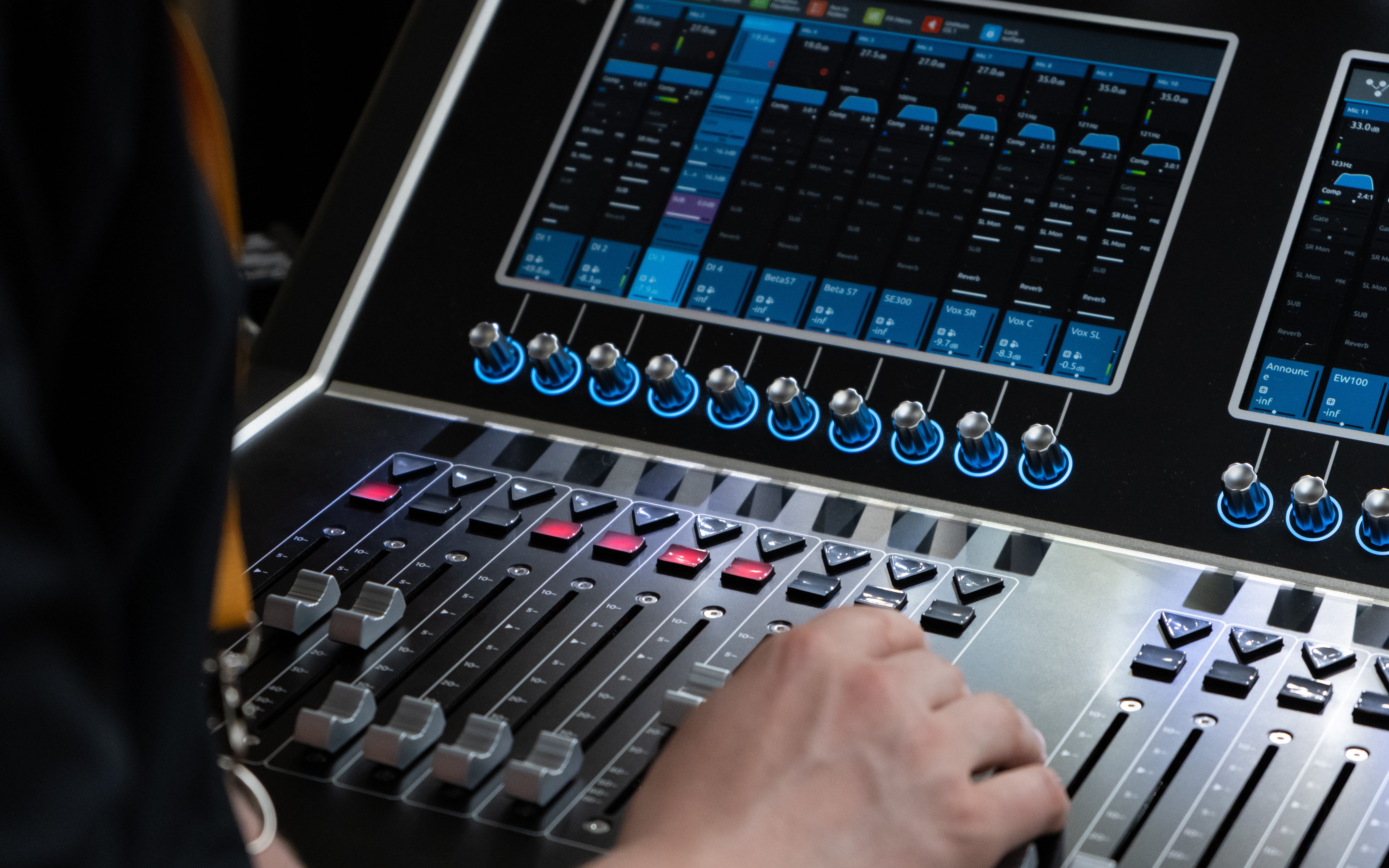
A general session room with a proper stage, two screens, wireless mics, and a tech run: $8,000–$20,000+
WiFi bandwidth for 100+ attendees doing video calls: often a separate line item. Sometimes $5,000+.
A dedicated AV technician to run the board during your sessions: $500–$1,500/day. Sometimes mandatory.
The proposals hotels send during the sales process often include basic AV line items as placeholders. The real number comes later, after you’ve signed, when you submit your actual run-of-show and they scope it out properly.
What to do about it:
Before you sign, ask the hotel for a detailed AV estimate based on your specific program needs. Give them your agenda, your room setup requirements, your session count. Get the number in writing before the contract is executed.
Ask explicitly whether you can use outside AV vendors and, if so, what the patch-in fee is.
Find out if WiFi is included in the meeting package or billed separately (and at what capacity).
If your event has any kind of production element (keynote speakers, hybrid components, recordings), get an outside AV company to bid on it in parallel so you have a real market comparison.
The goal isn’t to fight the hotel on AV, it’s to not be surprised. There’s a big difference between paying $15,000 for AV because you budgeted for it and paying $15,000 for AV because it showed up on your final invoice and you had no idea.
Room Block Release Dates: The Deadline Most People Miss
This one is simple but costly.
Almost every hotel contract has a room block release date. A specific deadline by which you need to confirm your final attendee count and release any unused rooms back to the hotel’s general inventory.
Miss that date, and one of two things happens: either the hotel keeps your block regardless (and you own the attrition risk on rooms that might have otherwise been released), or they release the rooms automatically but you lose the contracted rate for any late registrants.
In busy markets and peak seasons, this creates a real problem. Your attendees haven’t all booked yet. You’re still chasing confirmations. And suddenly the hotel wants an answer you don’t have.
What to do about it:
Know your release date before you sign. It should be clearly stated in the contract, usually 30, 60, or 90 days before arrival.
Build your internal RSVP deadline around the hotel’s release date, not the other way around. If the hotel wants final numbers by June 15, your team needs to confirm by June 1.
Negotiate for the ability to reduce your block in increments…a partial release at 90 days and a final release at 30 days, for example. This protects you if you’re still waiting on stragglers.
If you’re working with a distributed or remote team, build in extra lead time. Getting 200 remote employees to book their hotels is harder than it sounds.
The “Resort Fee” Problem (Yes, This Is Still Happening)
Resort fees (daily mandatory charges that can run $35–$75 per room per night) are still widespread at hotel properties, and they’re still causing budget problems for event planners who don’t account for them.
Here’s the thing: resort fees are often not included in the room rate you negotiated. They get added on at checkout. For a 3-night event with 80 rooms, a $50/night resort fee is $12,000 your team paid that wasn’t in your budget.
What to do about it:
Ask explicitly during contract negotiations whether resort fees will be charged to your room block and whether they can be waived or reduced. Many hotels will waive them for group contracts, but you have to ask.
If they won’t waive them, add the full resort fee to your room cost estimate when building your budget. Don’t let them be a surprise on the post-event invoice.
Have someone on your team communicate the resort fee to attendees clearly before arrival, especially if employees are covering their own incidentals. Nothing erodes trust faster than an unexpected charge at checkout.
The Master Account Trap
Most hotels will offer you a “master account” or a single billing mechanism where approved charges from your event get posted centrally, rather than to individual rooms. This is genuinely helpful for managing things like group meals, meeting room charges, and AV.
The problem is what happens when the parameters around the master account are unclear.
If your team knows there’s a master account, some of them will assume it covers everything. Minibar charges. Spa treatments. Room service at midnight. Individual bar tabs. We’ve seen master accounts come in $20,000–$30,000 over projection because nobody set clear expectations about what was and wasn’t covered.
What to do about it:
Define exactly what’s authorized on the master account in your contract and in your pre-event communications to attendees.
Ask the hotel for daily master account reports during the event so you can catch unexpected charges in real time, not after checkout.
Designate one person as the master account contact at the hotel. All disputed charges, additions, and authorizations go through that person.
Send a clear note to all attendees before the event explaining what’s covered and what they’ll be responsible for personally.
How to Actually Protect Yourself Before You Sign
I want to be direct here: this isn’t about being adversarial with your venue. Good hotel sales teams and event coordinators genuinely want your event to go well. The goal is alignment and making sure both sides understand the commitments before anyone puts pen to paper.
Here’s the short checklist I’d run through on any hotel contract before signing:
Attrition
What is the attrition threshold? (Push for 70% or lower)
What is the calculation method? (Per night vs. total)
Is there a partial release provision?
F&B
What is the minimum, stated as a net pre-tax/pre-service-charge number?
What categories count toward the minimum?
What’s the penalty structure for shortfall?
AV
Can I get a detailed AV estimate based on my actual program before signing?
Can I use outside AV vendors, and if so, what’s the fee?
Is WiFi included and at what capacity?
Room Block
What is the release date and is there a phased release option?
What happens to rooms not released by the deadline?
Fees
Are resort fees charged to the room block and can they be waived?
Are there any other mandatory fees not reflected in the room rate?
Master Account
What’s the process for approving master account charges?
Can I get daily reconciliation reports during the event?
If you can get clear, written answers to these questions before you sign, you’ve eliminated about 90% of the scenarios that cause post-event budget disasters.
The Bottom Line
Signing a hotel contract is not the finish line. It’s the beginning of a financial commitment that has a lot more exposure than the room rate suggests.
The good news: none of this is unknowable. You don’t need a hotel lawyer or a decade of event planning experience to protect yourself. You just need to ask the right questions at the right time, before you sign, not after the invoice arrives.
At Offsite, we’ve been through this process with thousands of groups across hundreds of venues globally. We know where the landmines are because we’ve stepped on most of them. It’s a big part of why teams that work with us end up with fewer billing surprises. We’ve already built these protections into how we negotiate and structure contracts on their behalf.
If you’re heading into a venue negotiation soon, use the checklist above. Read the attrition clause twice. Ask about the F&B minimum before you talk about room rate. And don’t sign anything until you have a real AV number in writing.
Your CFO will thank you. And honestly, so will your future self.
Thanks for reading.
Jared
PS - when you’re ready to plan your next offsite, search our curated marketplace with thousands of amazing offsite venues, up to 50% savings on room blocks, meeting space, and more.
Plus, we offer end-to-end offsite planning services if you want a “done for you” experience. See why companies like Remote, Buffer, Guild, Perplexity, 15Five, and others trust Offsite for their team retreats.
Upcoming Events and Webinars
May 13 - “Unfiltered” Dinner in San Francisco (LAST CALL!)
May 18 - “Unfiltered” Conference In New York (LAST CALL!)
May 20 - “Unfiltered” Dinner in Atlanta (LAST CALL!)
May 21 - [WEBINAR] AI Workflows That Actually Work For People Leaders
May 26 - Dinner for Chief People Officers and CHROs in New York
June 9 - “Unfiltered” Dinner in New York (new!)
June 9 - “Unfiltered” Dinner in Los Angeles (new!)
June 10 - Dinner for Chief People Officers and CHROs in San Francisco (new!)
June 10 - [WEBINAR] “State of the Union” for Executive Assistants
June 23 - [WEBINAR] Offsite Budgeting Masterclass
Sept 18 - “Unfiltered” Conference in San Francisco